The signs we could see—but did not yet understand.
Jack’s story began with tiptoe walking. It led our family through years of treatment without a diagnosis, an eventual answer in May 2025, and the ongoing work of helping him live fully with CMT4C.
Looking back, the earliest sign was there almost from the beginning.
Shortly after Jack learned to walk, he began walking on his toes. At the time, it seemed like the sort of thing a child might simply outgrow. Both of us noticed it, though, and family photographs show it clearly by 2016, when he was two years old.
We began where most parents would: with his pediatrician. That led us to orthopedic care and an effort to address the tightness we could see in his feet and Achilles tendons. We did not yet know that something deeper was affecting the nerves controlling his muscles.
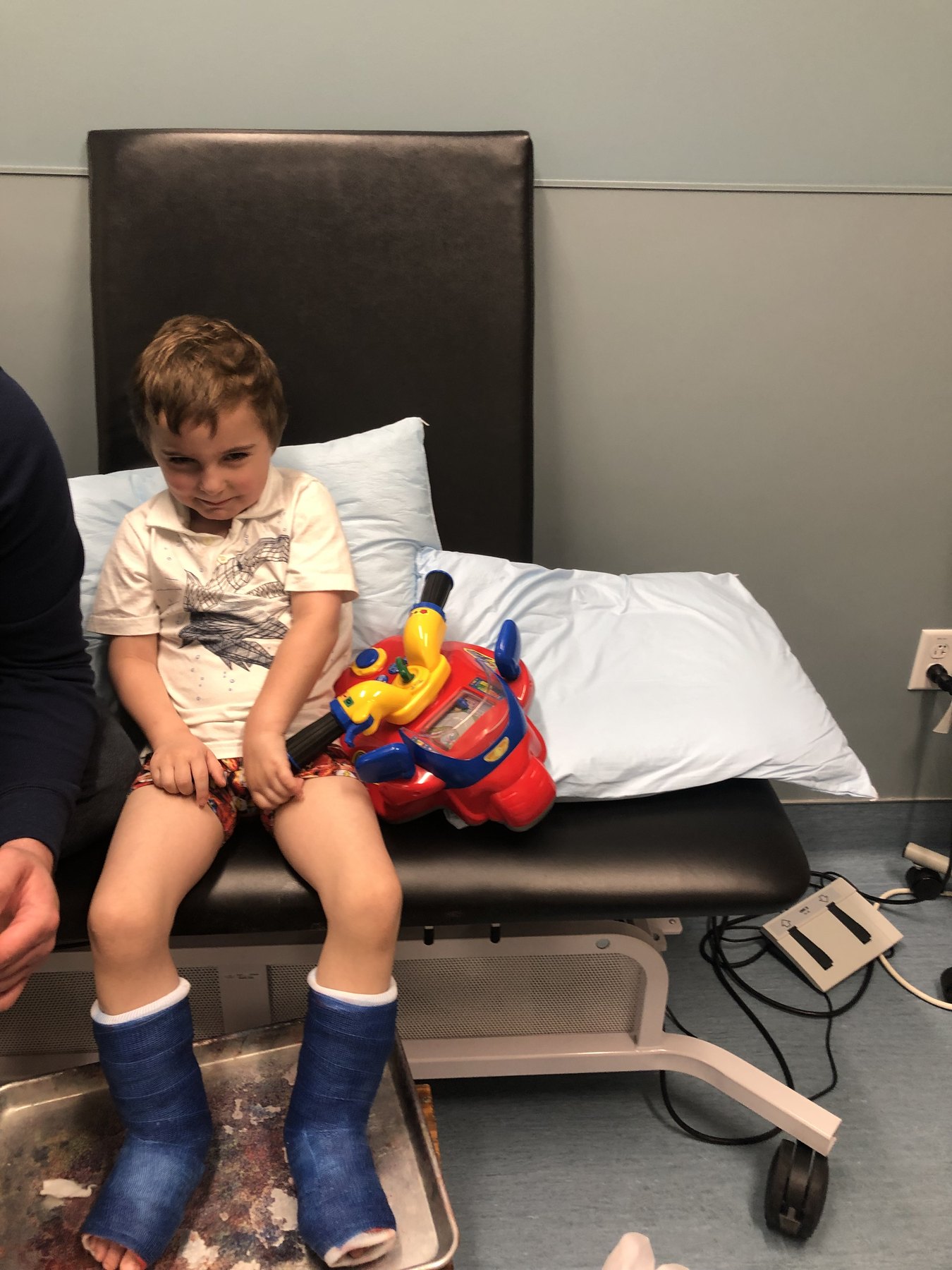
The treatment became part of everyday life
Appointments and equipment were only part of the story. Jack still went places, played, and grew up around the treatments intended to help his feet and ankles.
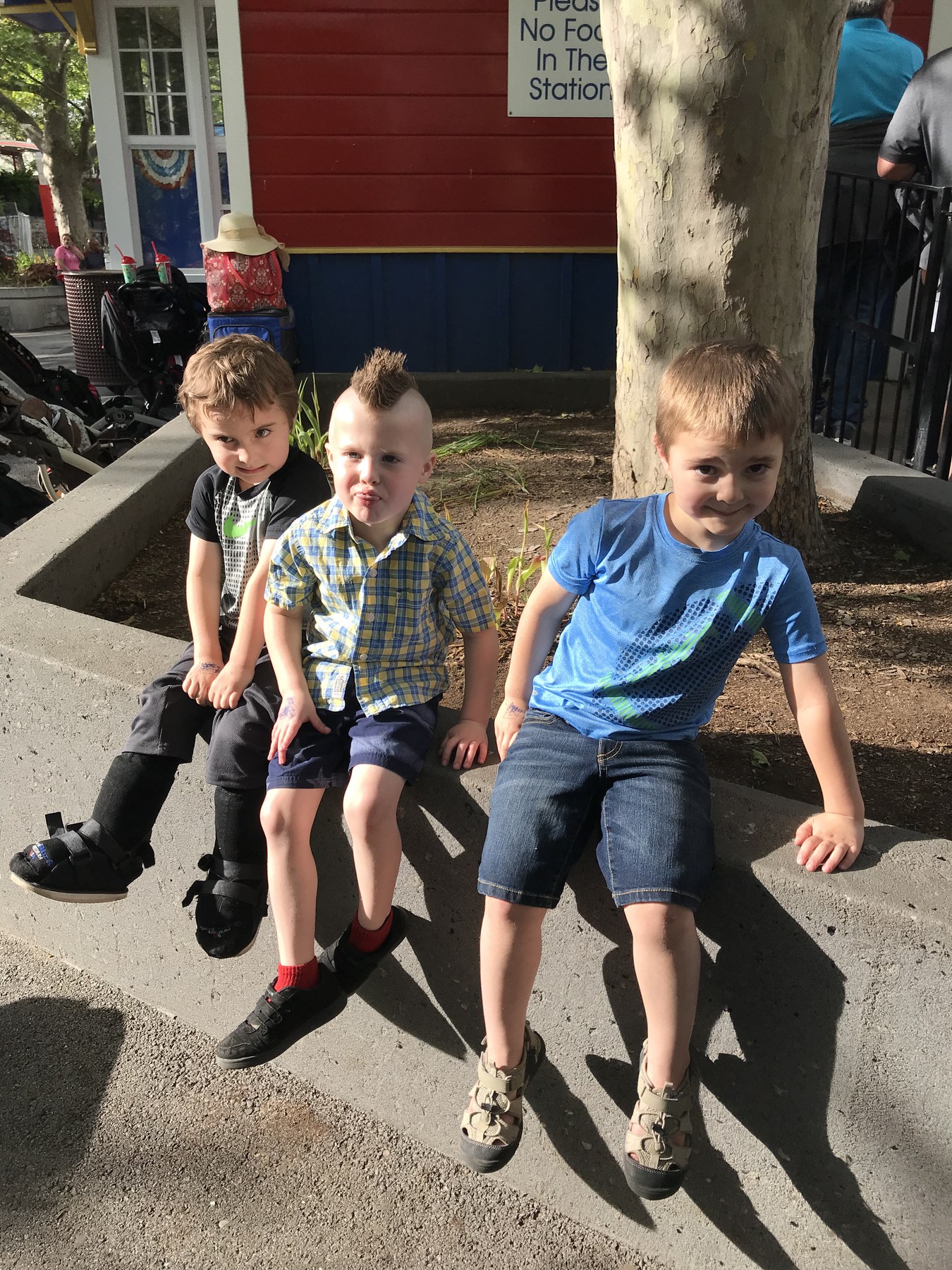
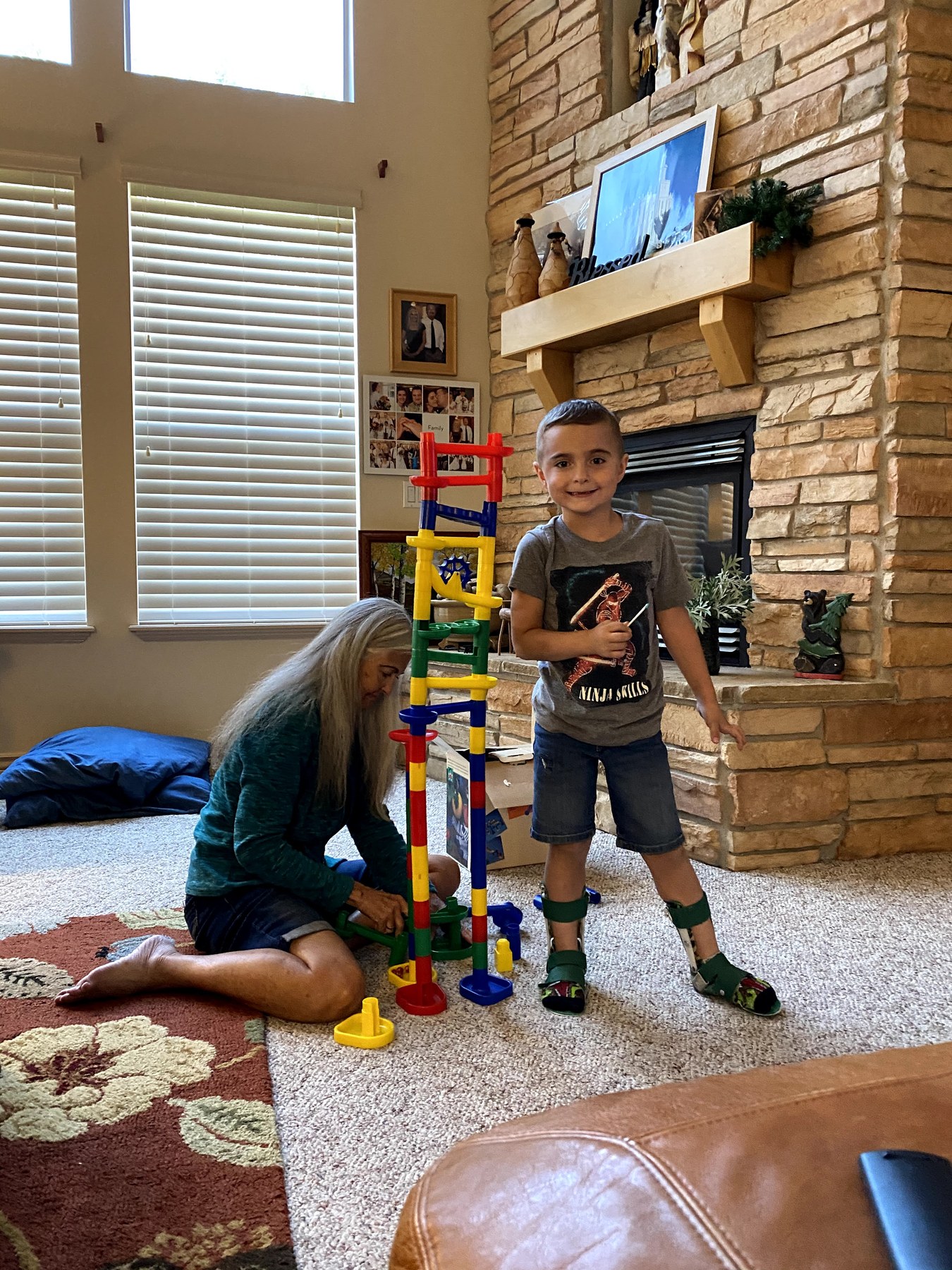
Treating what we could see
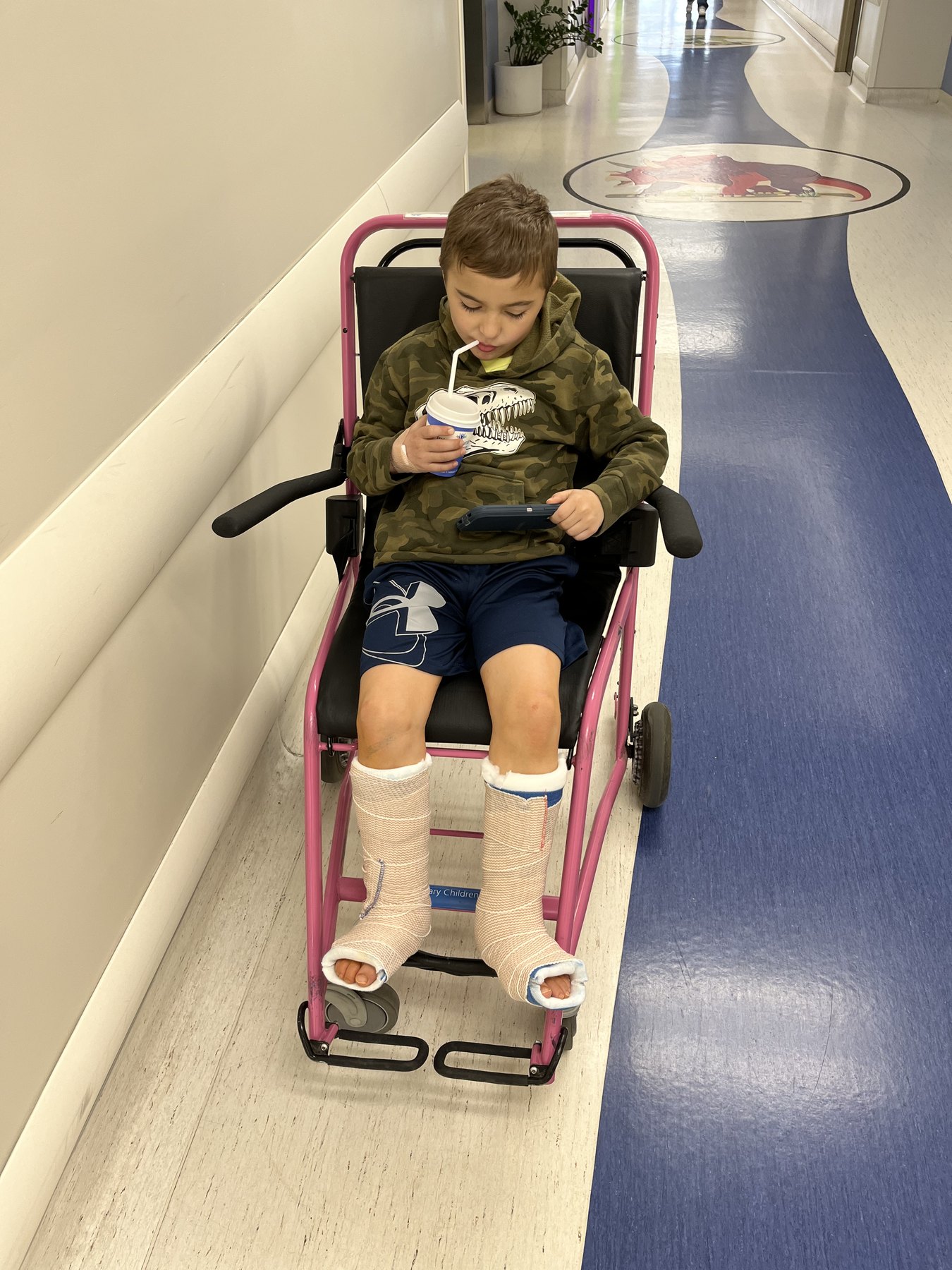
Serial casting and orthotic braces addressed the tightness in Jack’s feet and ankles, but they could not explain why that tightness had developed. We were still treating visible symptoms without knowing the underlying cause.
On April 5, 2022, Jack underwent a gastrocnemius recession, a procedure intended to reduce calf tightness and improve ankle flexibility. We still did not know he had Charcot-Marie-Tooth disease. After he healed, Jack no longer walked on his toes—but another difficulty became harder to miss. His balance was poor.
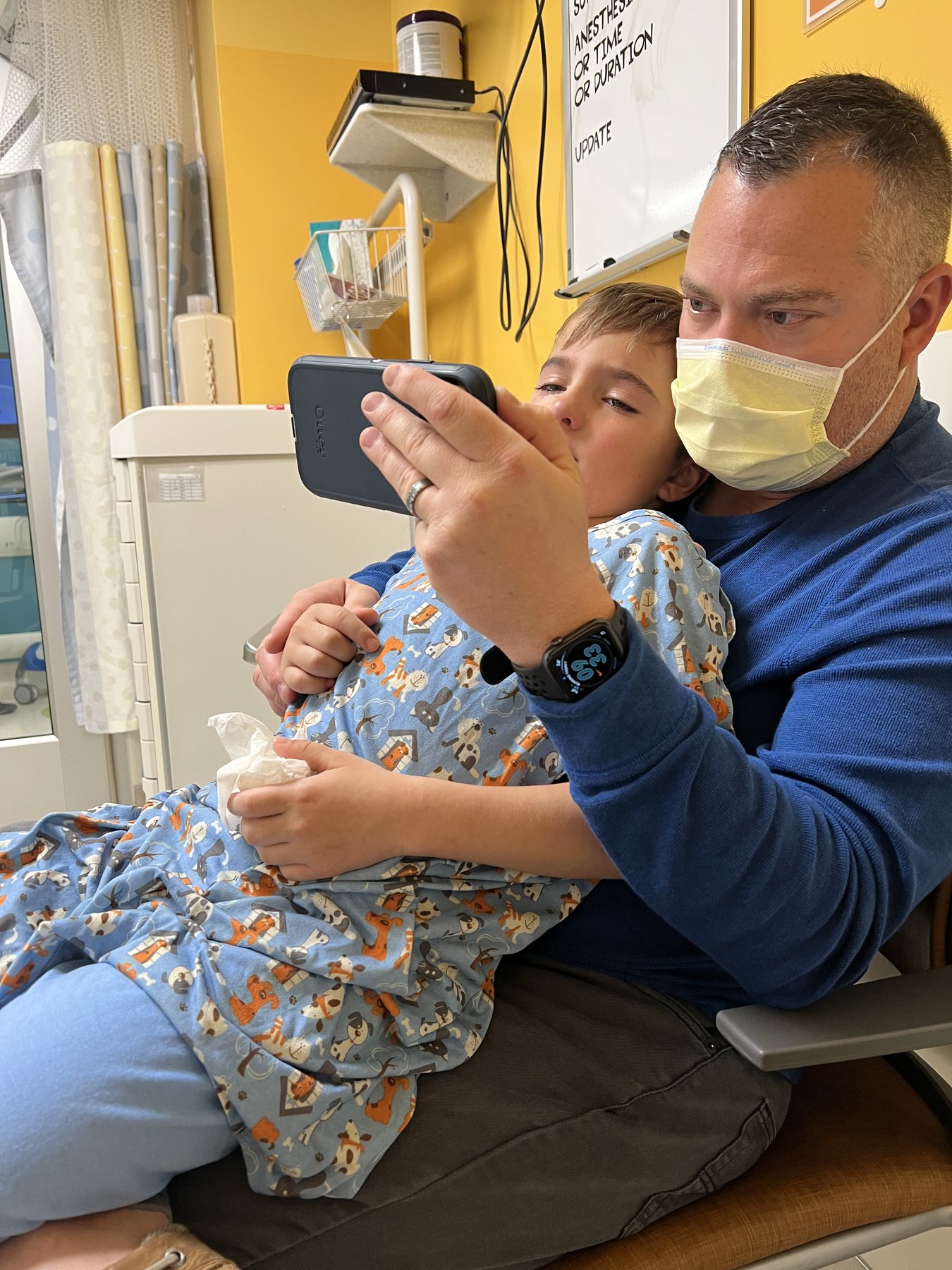
The problem beneath the problem
The differences became especially painful when we tried to teach Jack and his twin brother, Luke, to ride bicycles and scooters. Luke took to both quickly. Jack could not find the balance he needed, no matter how hard he tried or how much we tried to help.
It was frustrating for Jack, and it was frustrating for us because we still did not know why. The tripping and falling became more frequent. This was no longer just about toe walking or tight tendons.
At a follow-up visit, the surgeon who had performed Jack’s gastrocnemius recession checked his reflexes and balance. In her view, the pattern pointed to something neurological. That observation changed the direction of our search, and we scheduled an appointment with a neurologist in 2024.
An answer at last
Genetic testing finally gave us the answer in May 2025: CMT4C. Jack had inherited one disease-causing change from each of us. Neither parent had known we carried it.
Until that spring—nearly three years after his surgery and years after we first noticed the toe walking—we had no idea that CMT4C was the underlying cause. The diagnosis gave a name to years of confusing signs. It also brought surprise, fear, sadness, frustration, and a new set of questions about what the future might hold.
The ride he could make his own
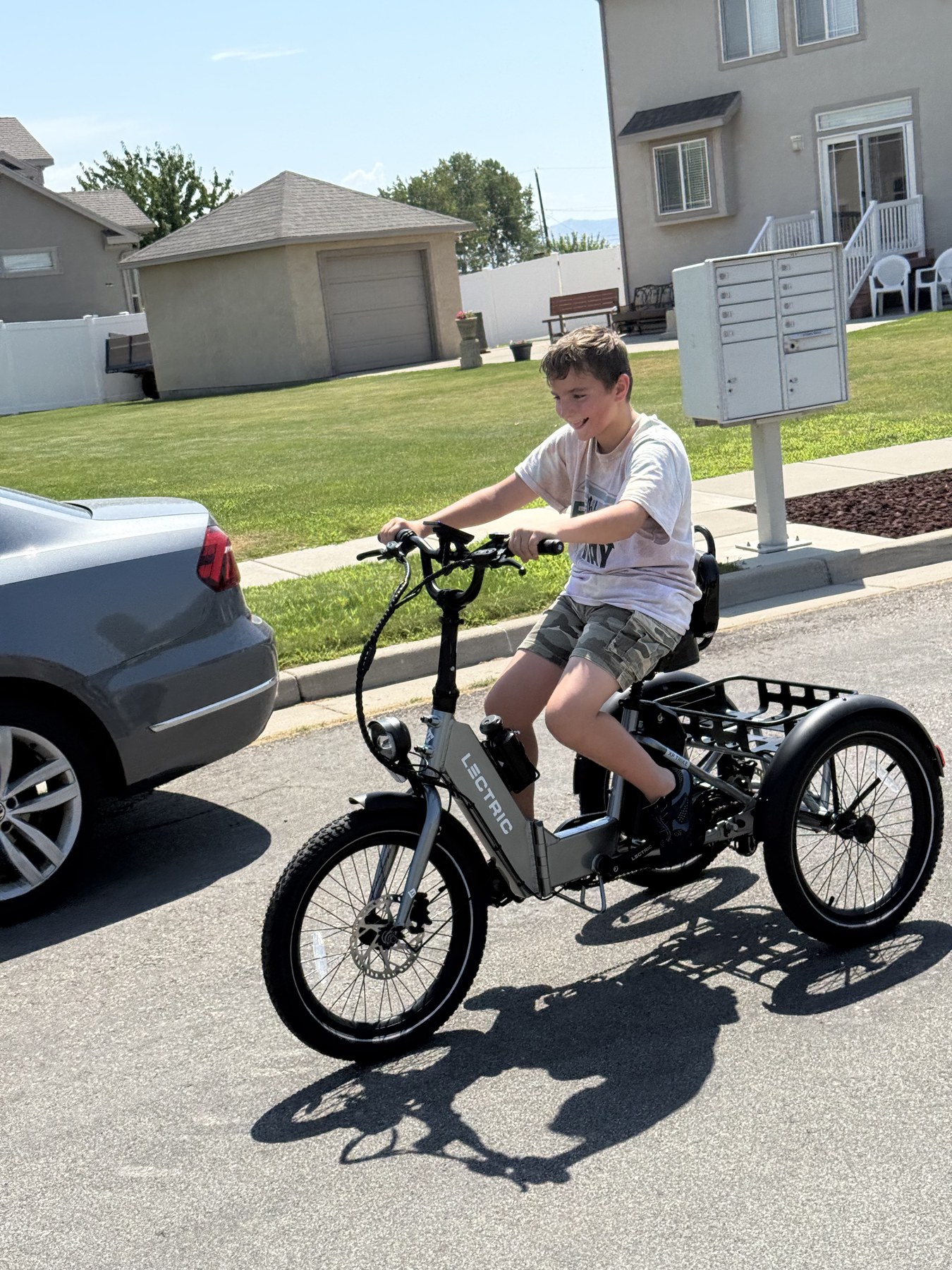
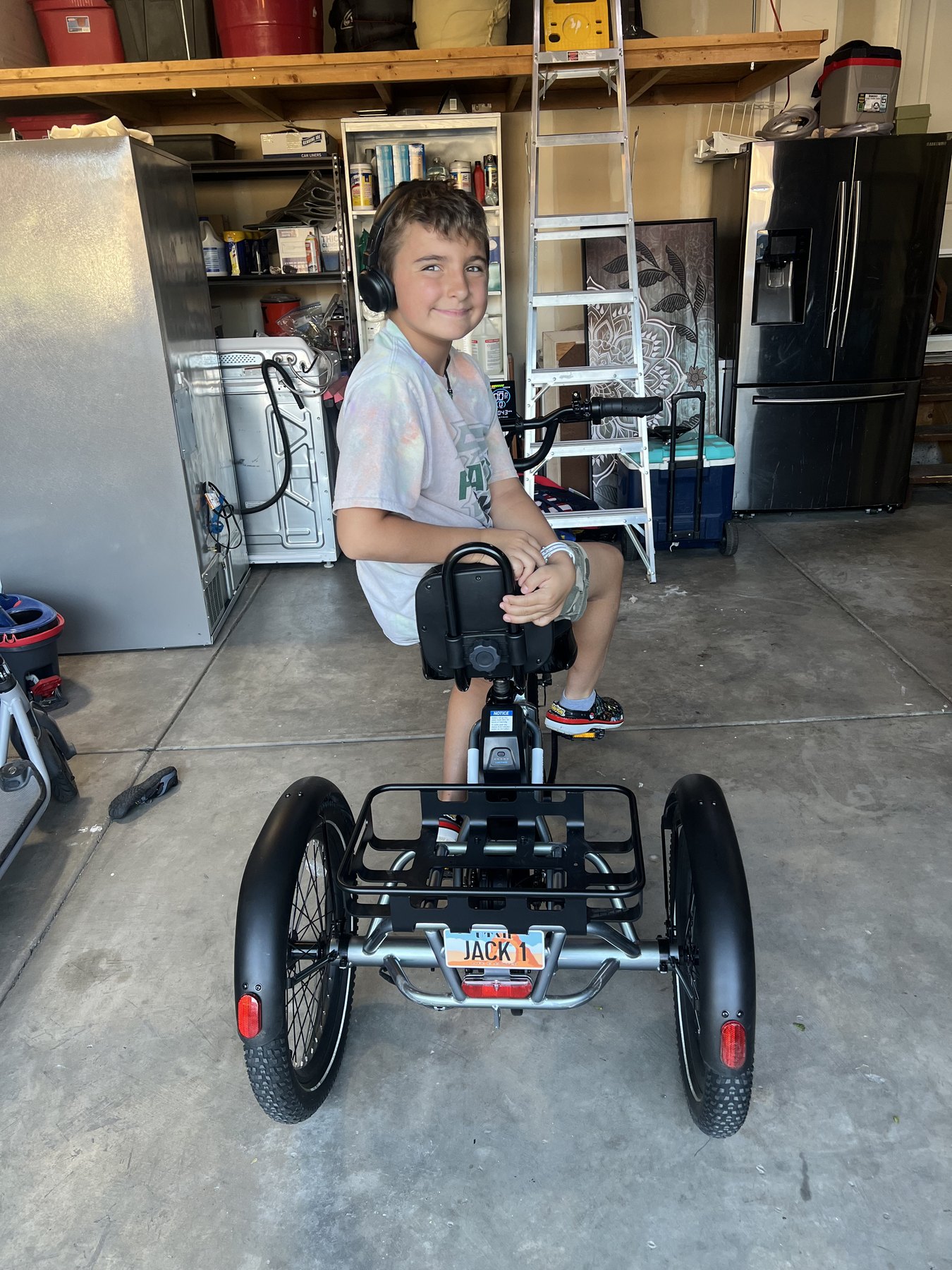
A conventional bicycle never became safe or practical for Jack. So we found him a Lectric electric tricycle: stable, capable, and still his. It does not erase the frustration that came before it, but it gives him a way to ride on his own terms.
Who Jack is
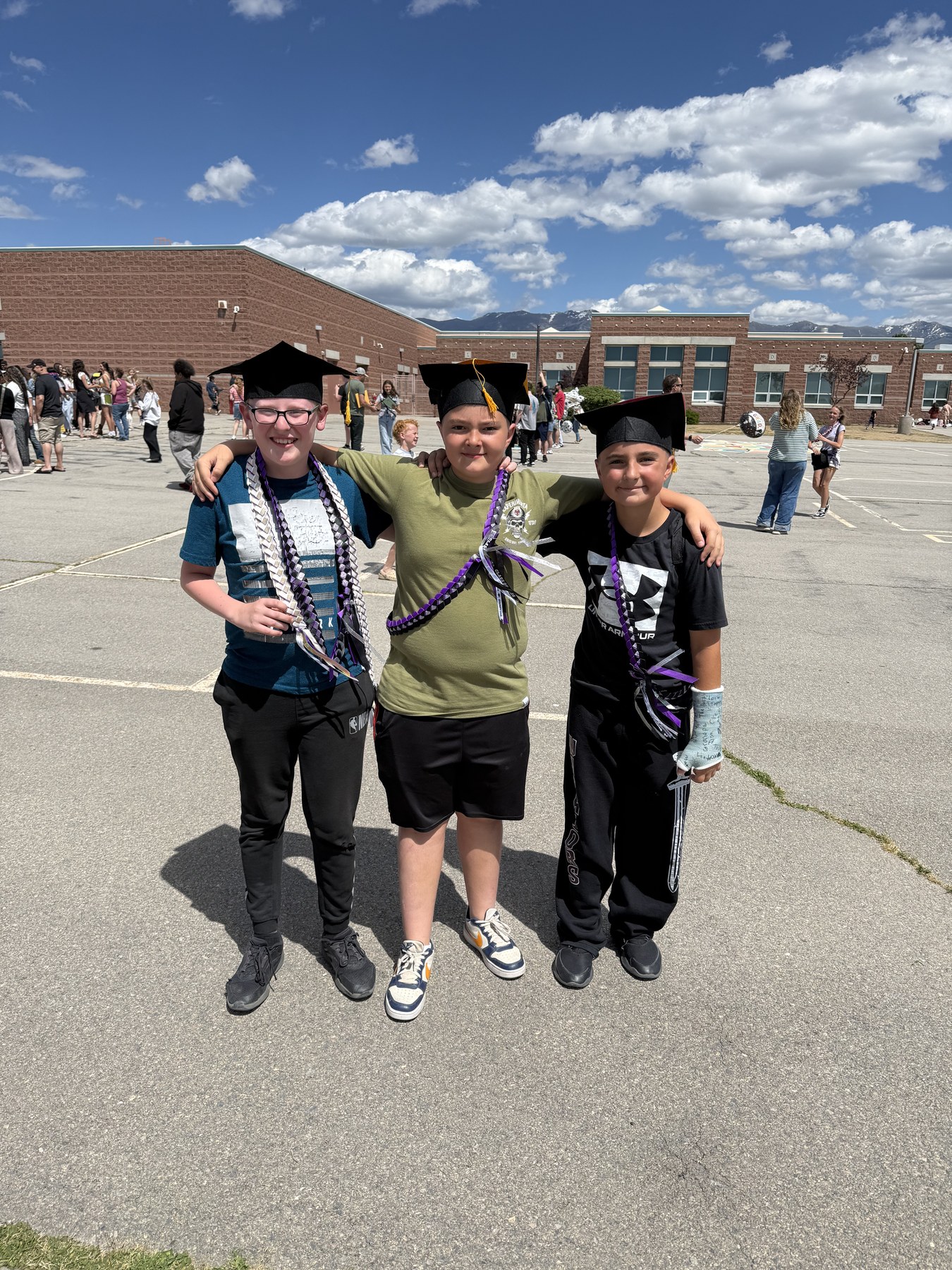
Jack is generally a happy, positive boy who loves to laugh and joke around. He loves PC gaming—especially Fortnite and Minecraft—and watching YouTube. He loves music and plays the ukulele. He likes chess, fishing, spending time with friends, and collecting Pokémon cards, including prized cards he protects carefully in sleeves and binders. In sixth grade, he auditioned for student council and earned a place.
CMT4C is part of his life. It is not the whole of his life.
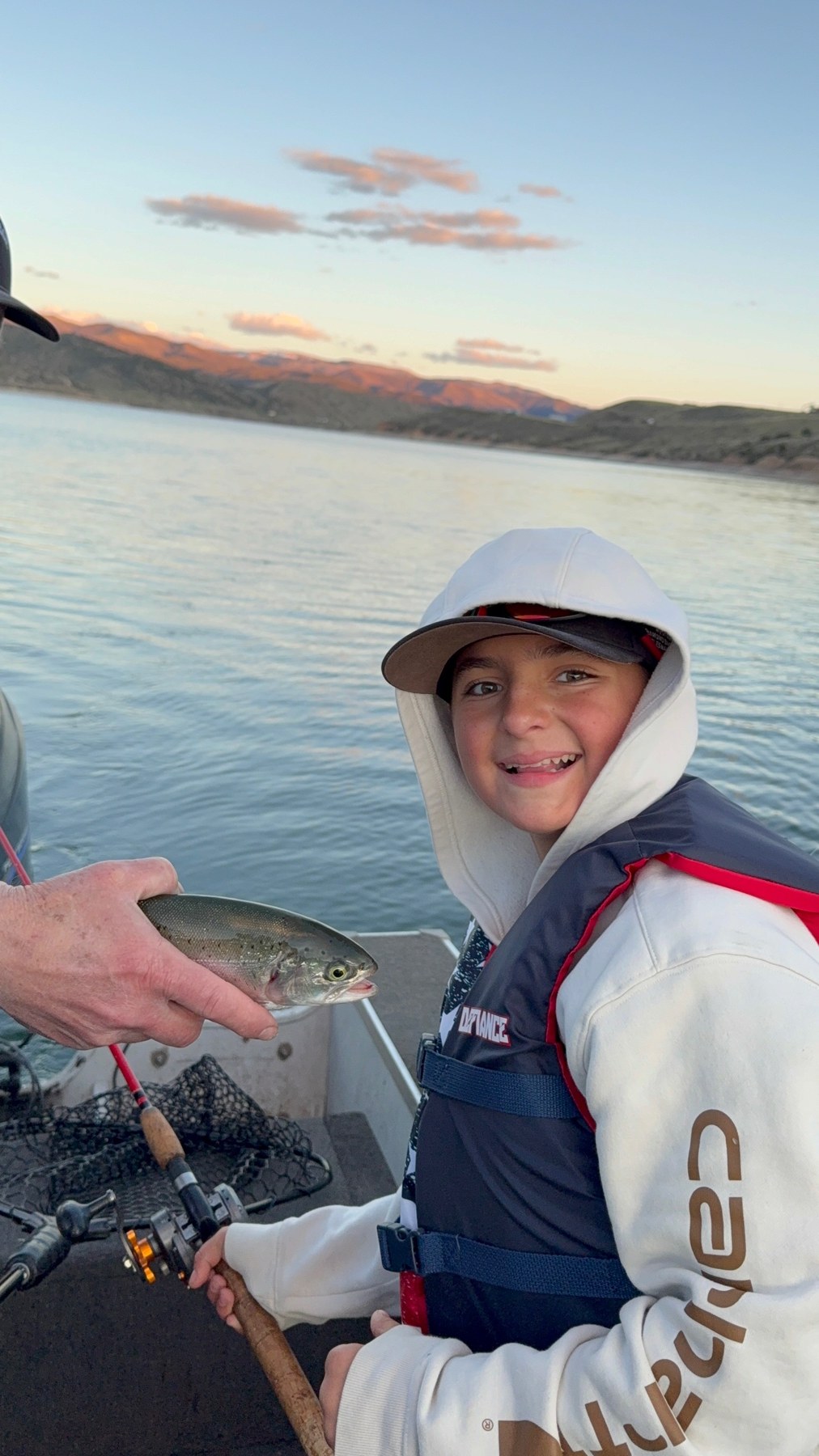
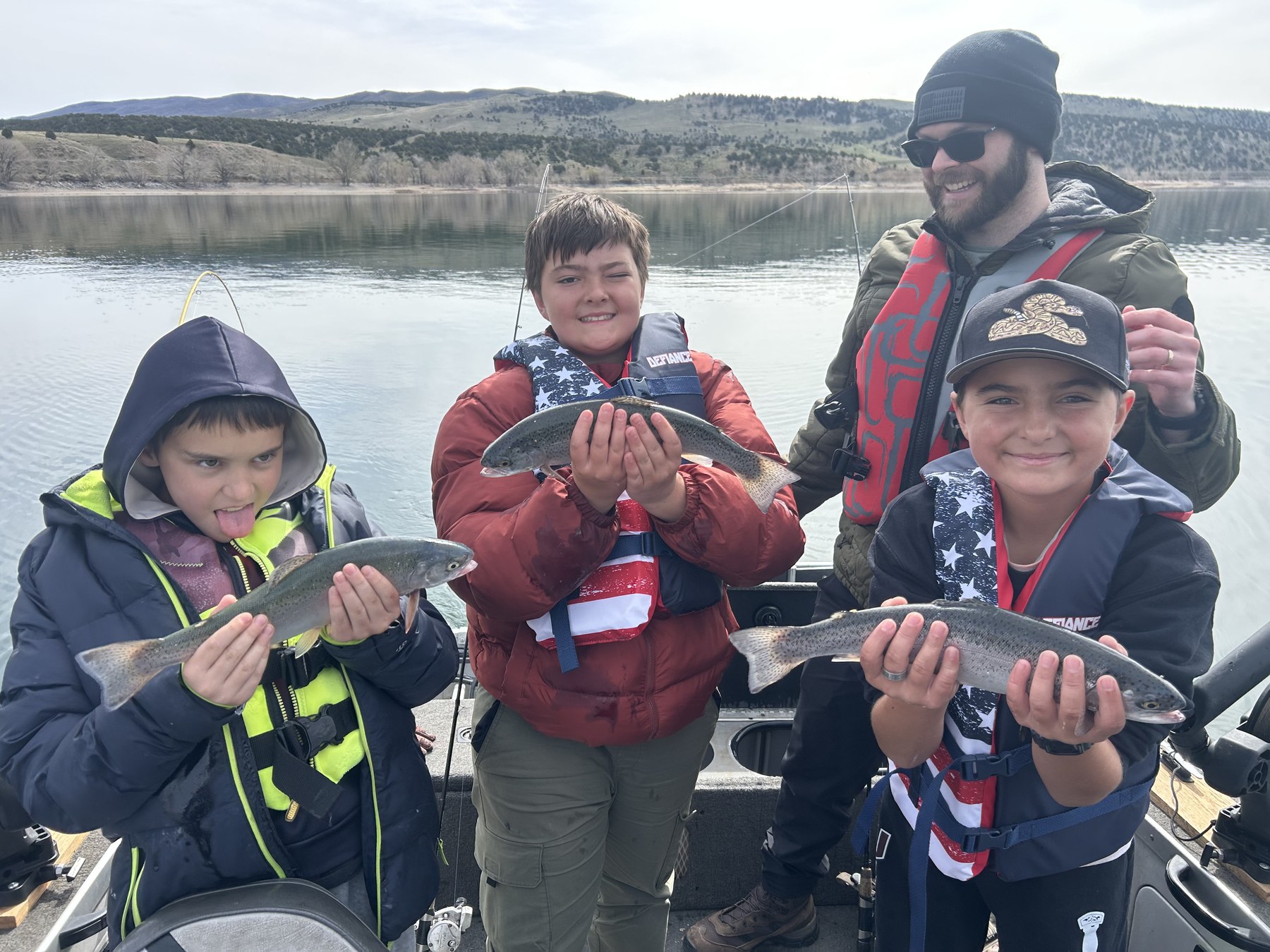
He likes to fish
Fishing gives Jack time outdoors, time with Luke, and the excitement of bringing in a catch. These are the ordinary, important parts of childhood that belong in his story too.
Street hockey and the cost of falling
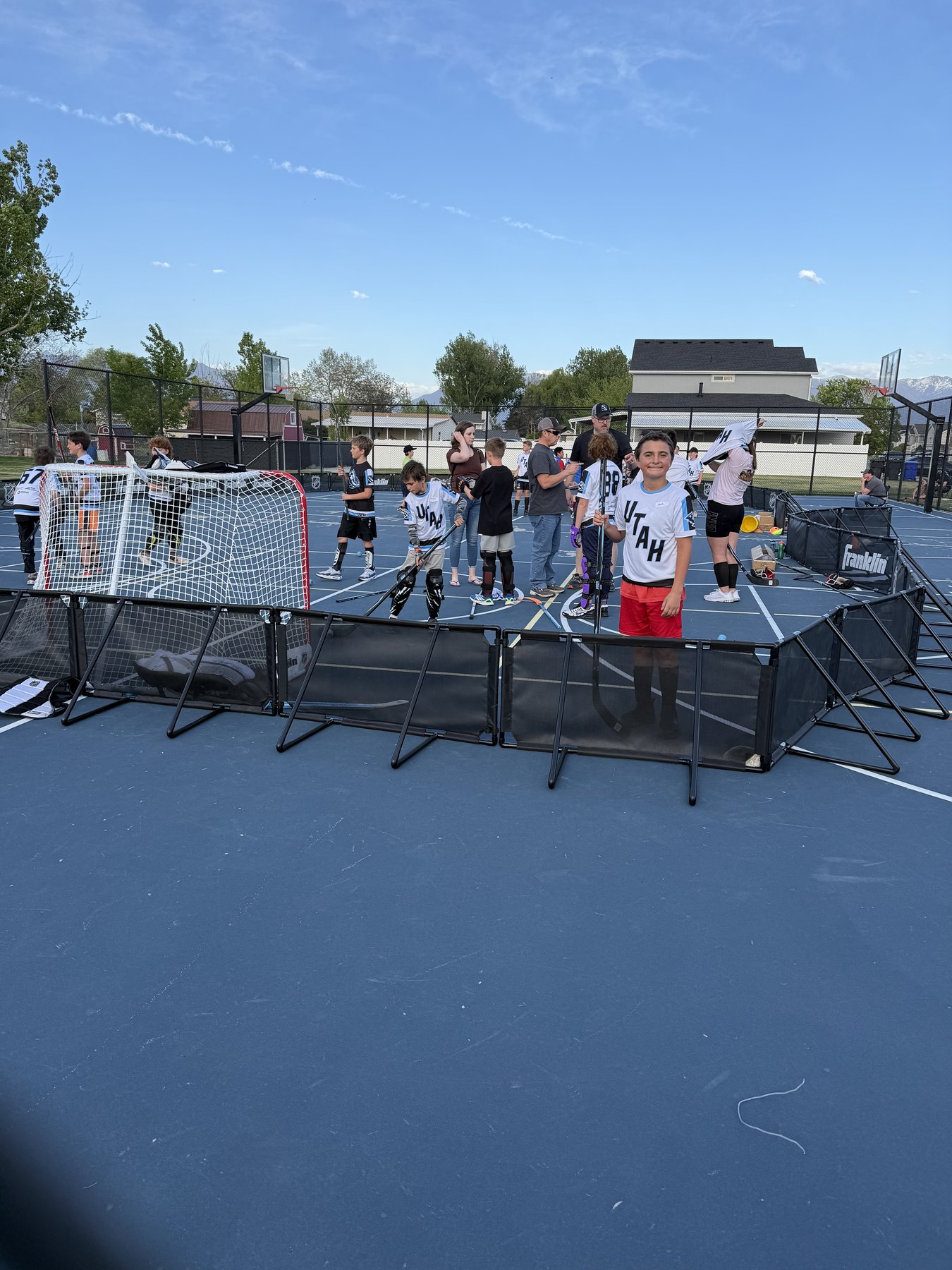
Street hockey gave Jack a chance to compete and belong. But after a fall left him with a broken thumb, he had to leave the team. His teammates went on to play in the championship.
That loss captures something families living with CMT know too well: adaptation is not always a cheerful substitute. Sometimes it follows disappointment. Sometimes a child has to grieve an activity before the family can begin looking for another way forward.
A family trip, a game ball, and room for joy
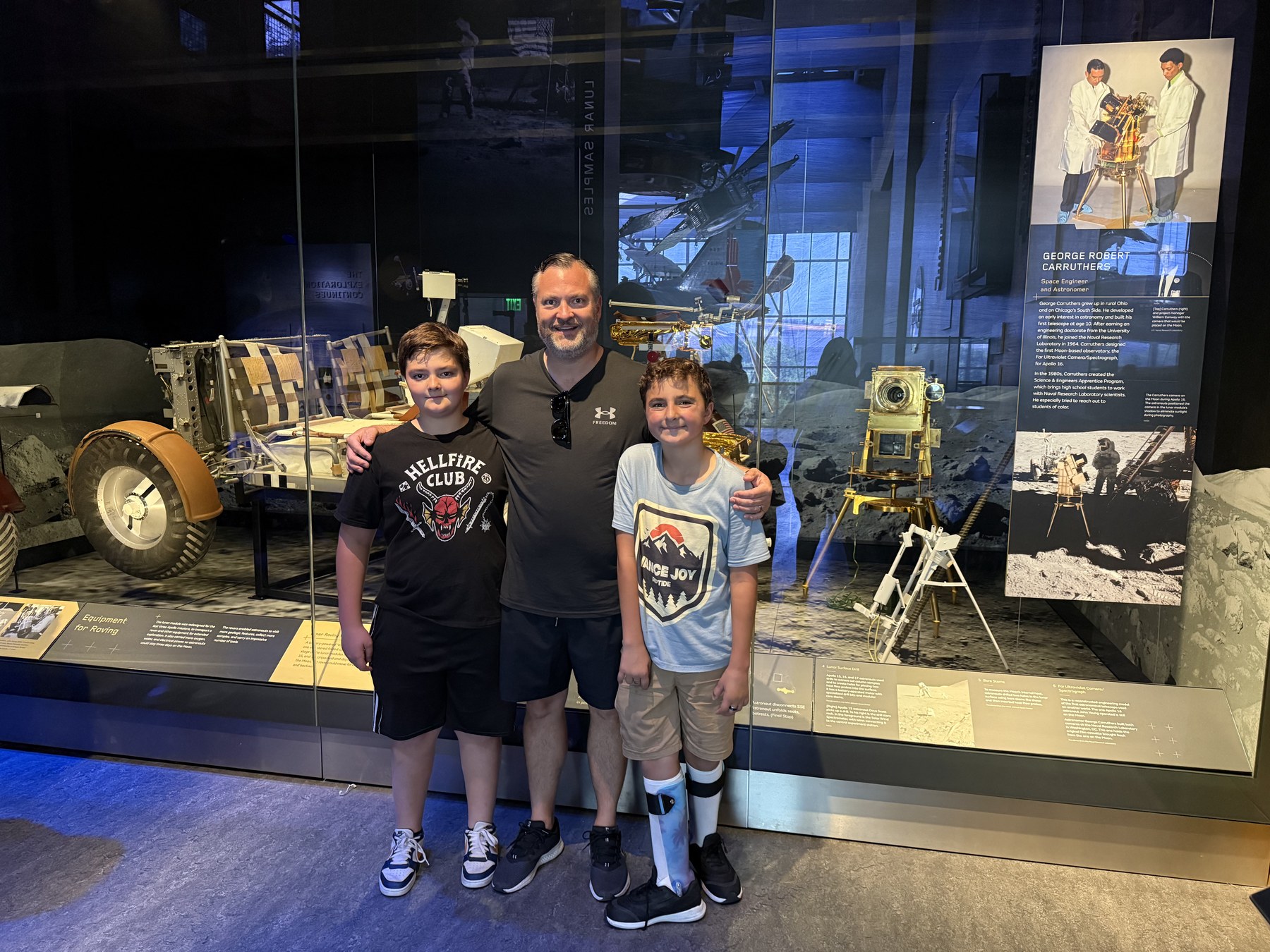
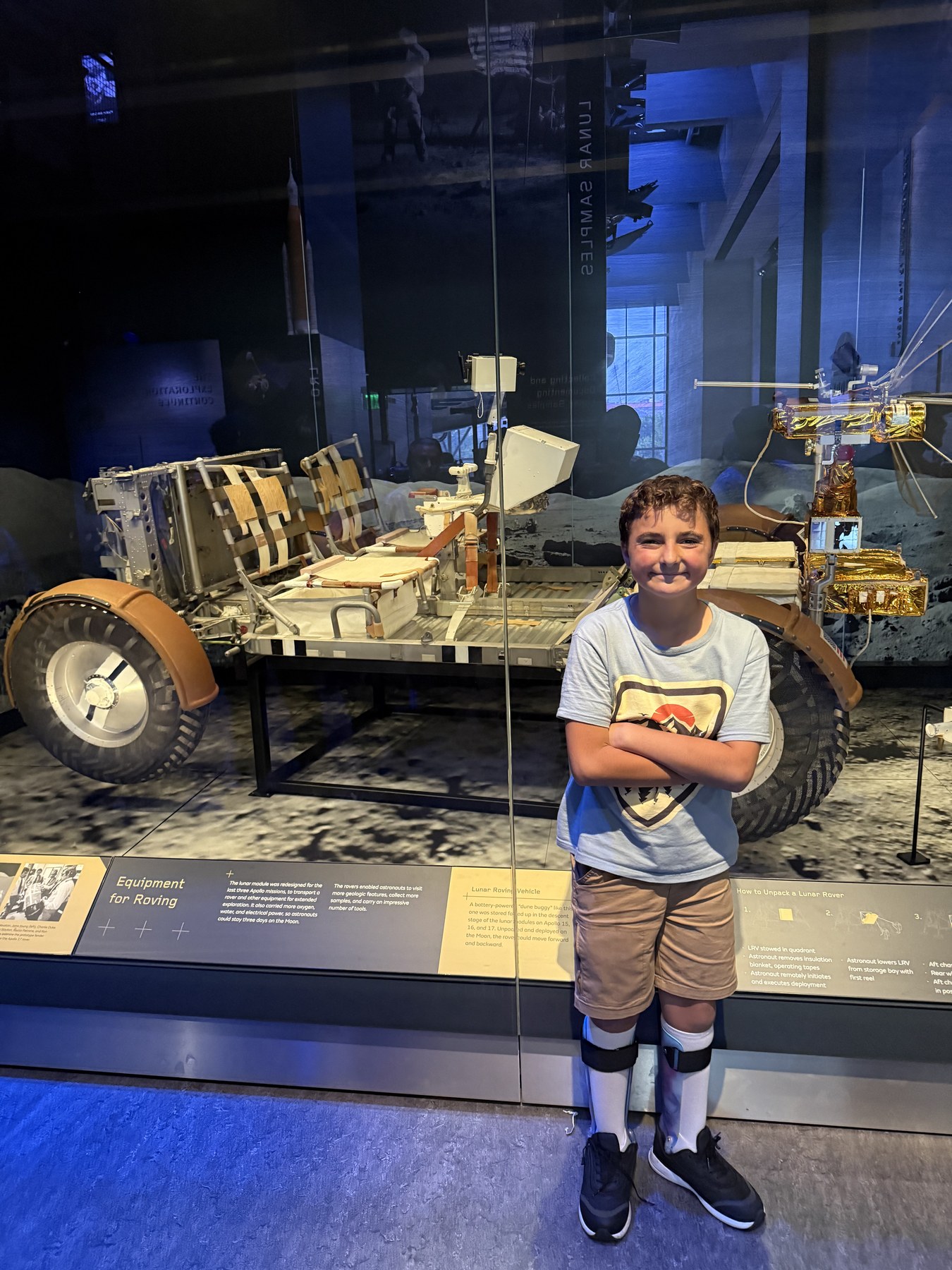
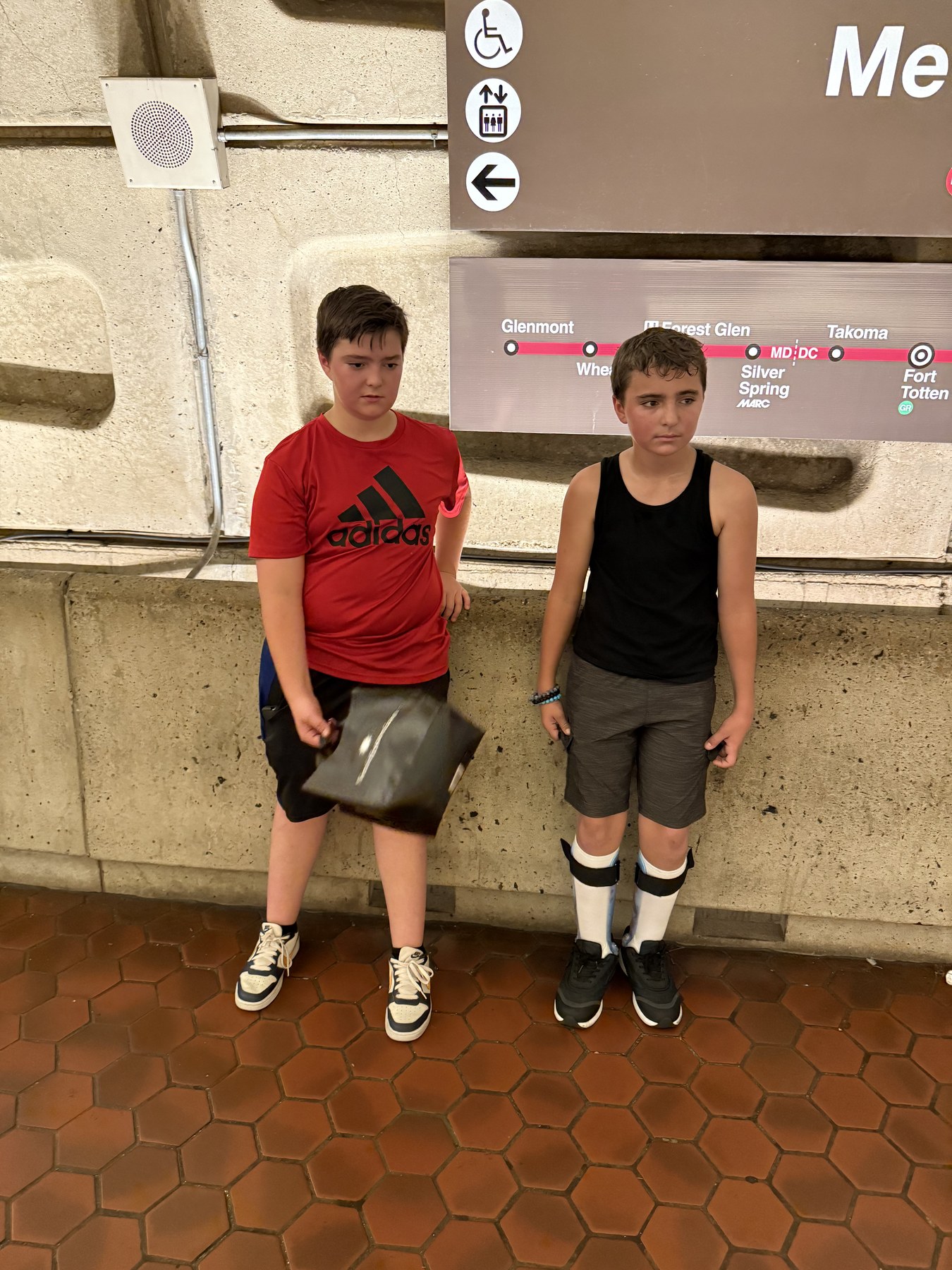
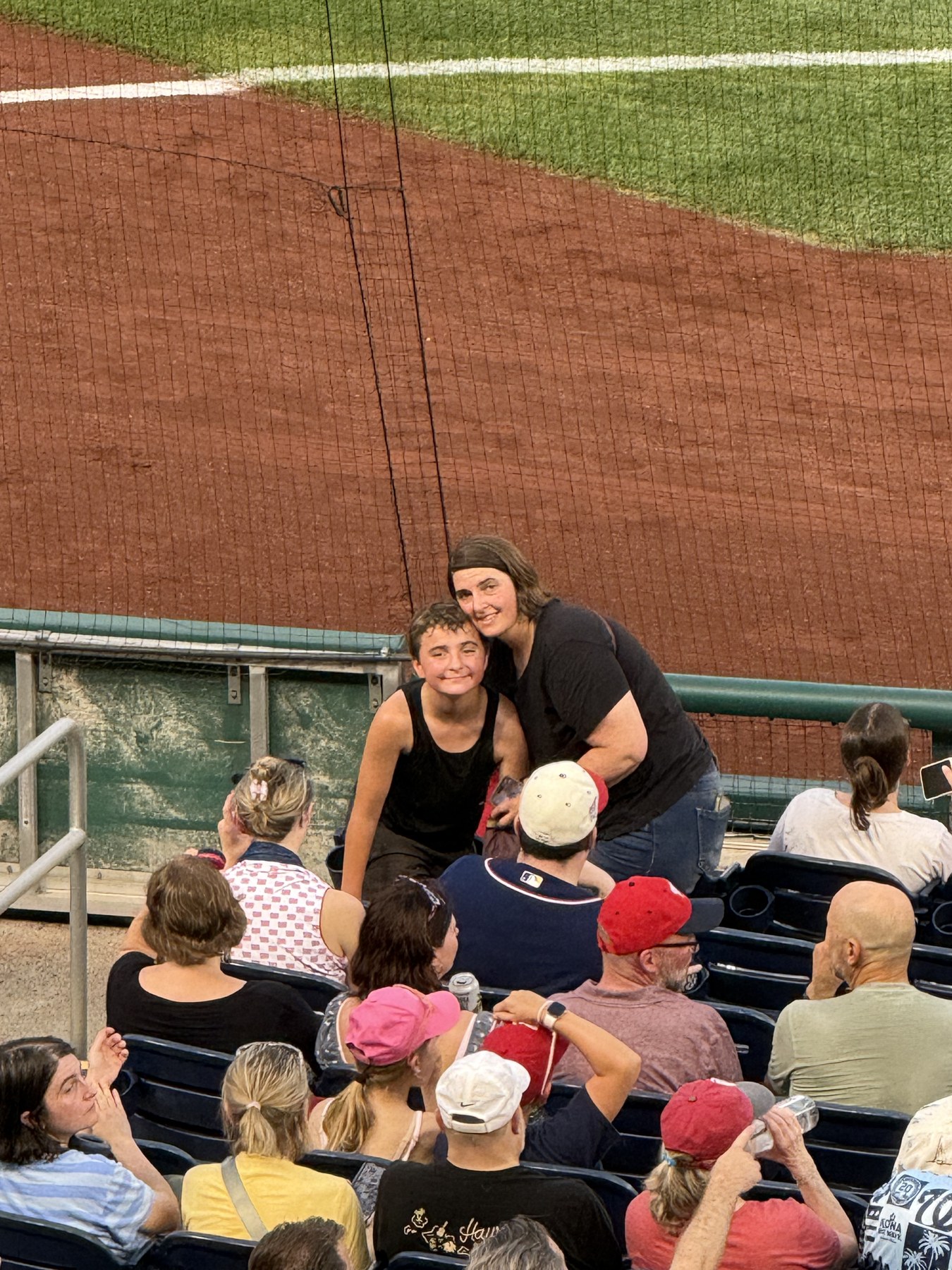
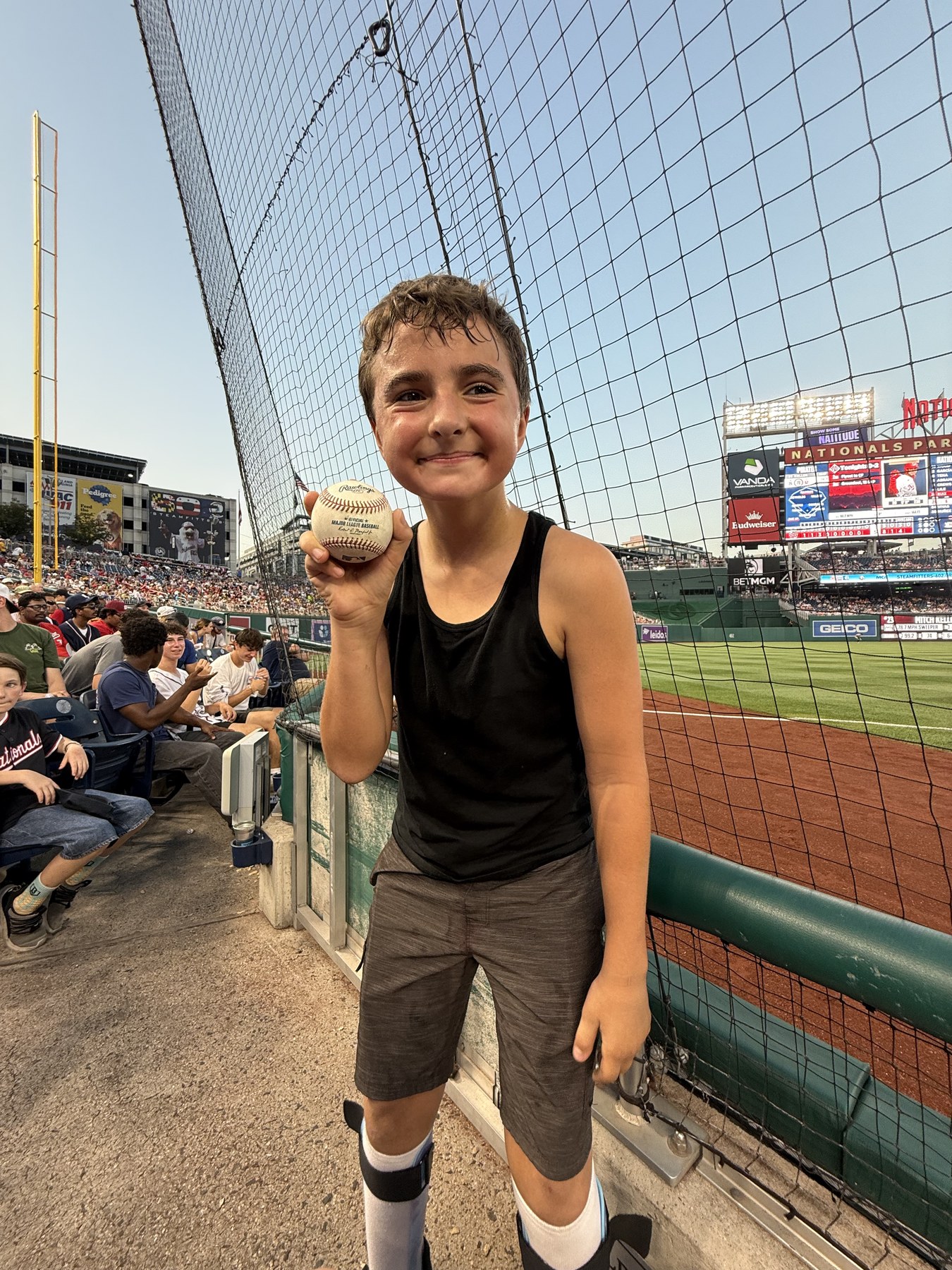
CMT4C travels with Jack, but it does not erase the experience of discovery, family adventure, or a moment of pure excitement at the ballpark. On a recent trip to Washington, D.C., he explored the Smithsonian National Air and Space Museum, navigated the Metro with his twin brother, Luke, and came home from a Nationals game with a game ball.
Seventh grade—and what CMT4C is asking of him now
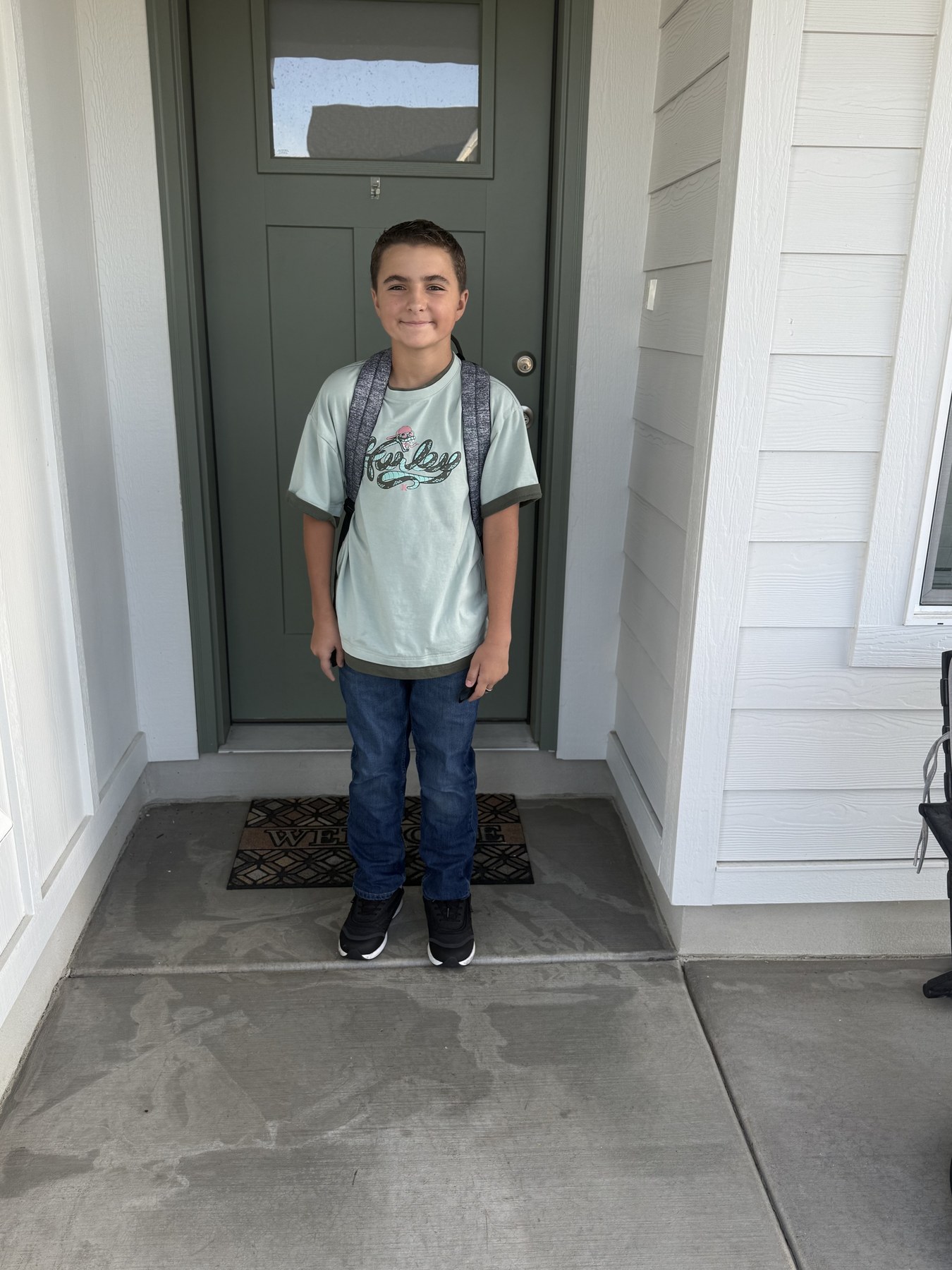
Jack has now started seventh grade. The neuropathy has worsened. He has described anger, sadness, and the painful wish to feel “normal”—to be able to feel properly with his feet, toes, and fingers. He needs orthotic braces to help him walk and give him more reliable balance, along with special shoes made to fit around the braces.
He has tripped and fallen so often that his knees bear the scars of hitting concrete. These are not abstract symptoms. They affect the things a twelve-year-old wants to do, the risks he has to calculate, and the way he sometimes sees himself.
Jack can be joyful and struggling at the same time. Both things are true.
No family should have to navigate CMT4C alone.
We do not have every answer. We are still learning, adapting, worrying, and trying to help Jack make room for both the hard feelings and the good parts of his life.
We are sharing our experience because another parent may recognize an early sign, another child may feel seen, and families affected by this rare subtype may find one another. CMT4C is part of Jack’s story. It is not the end of his story, and it does not get to tell the whole story by itself.